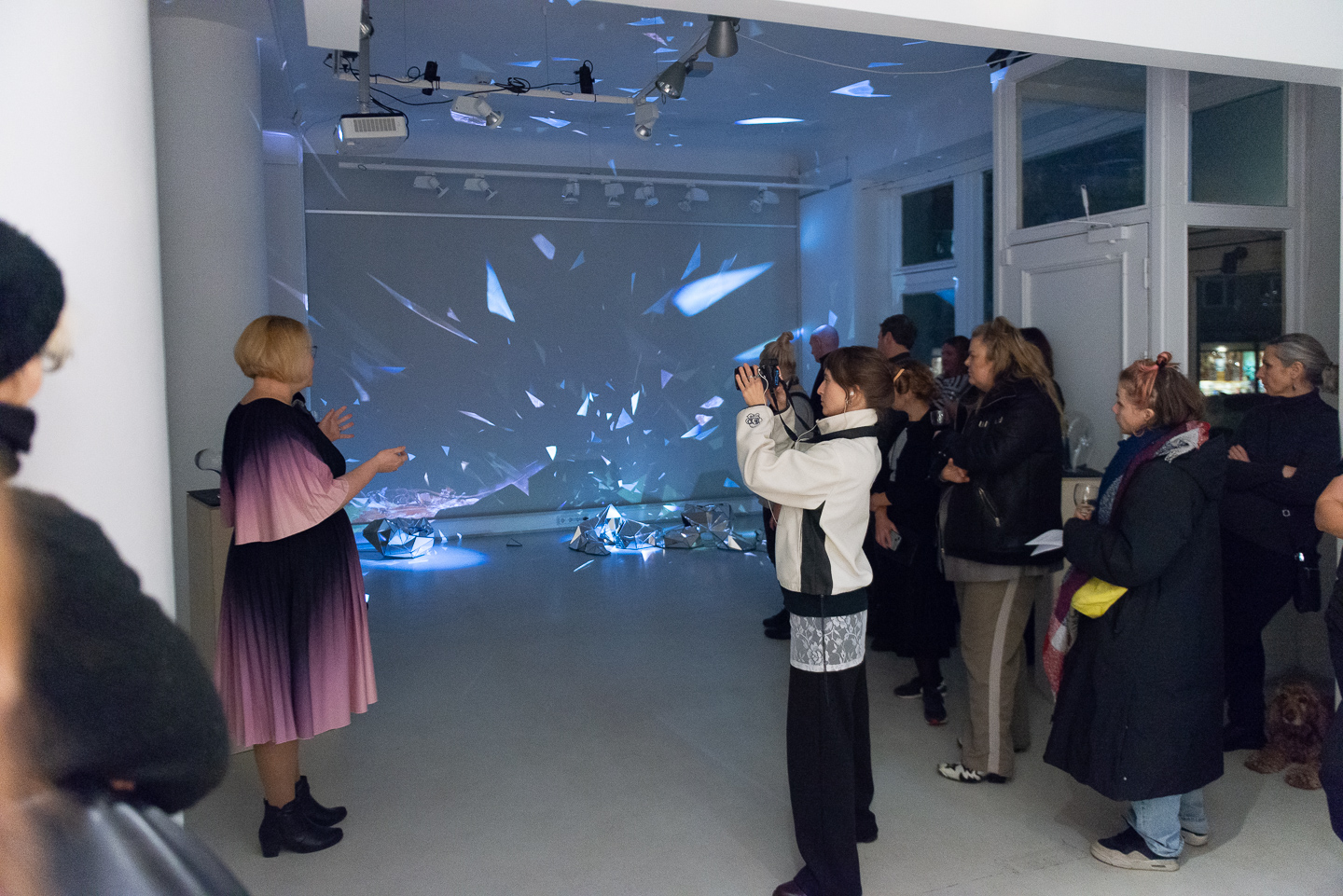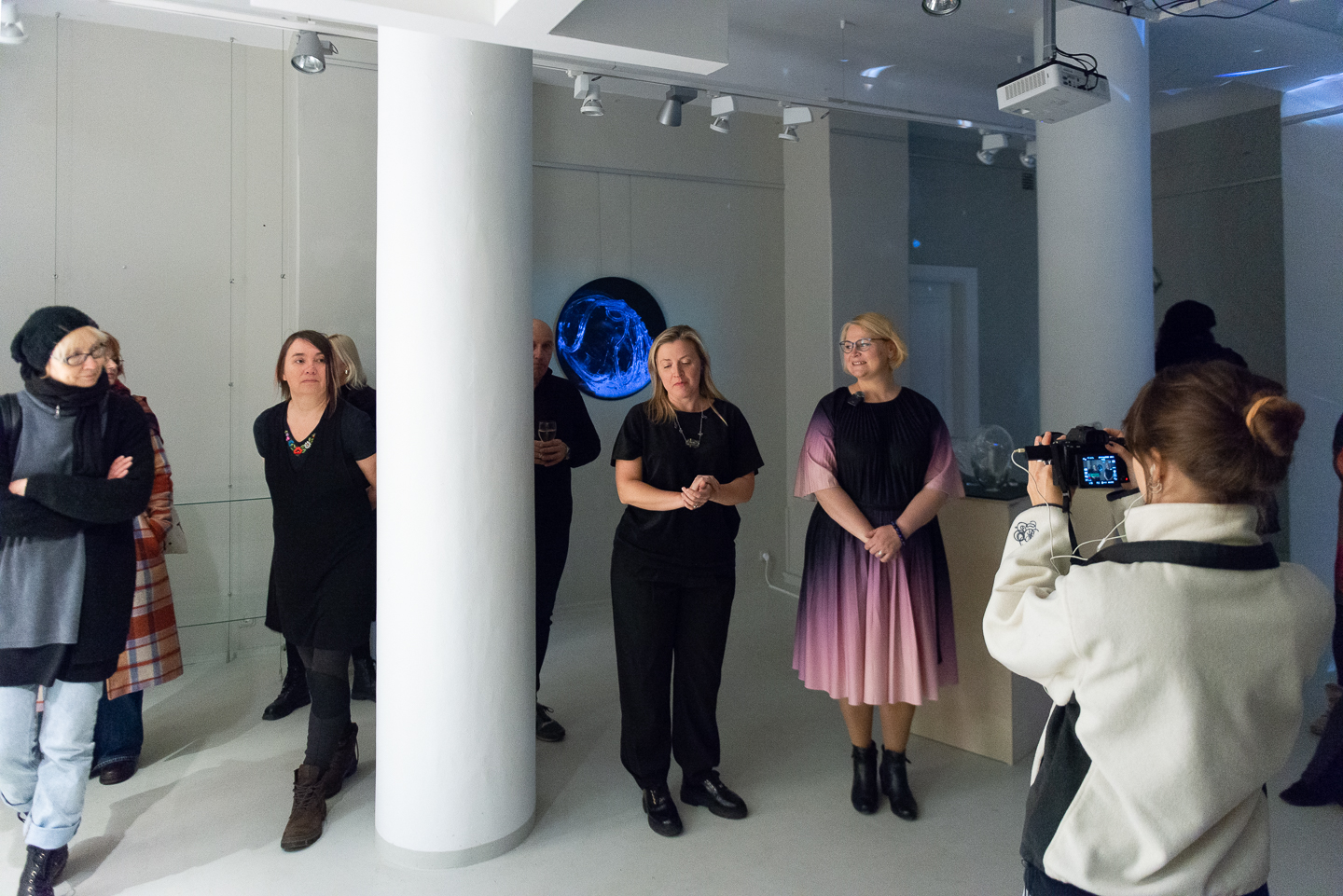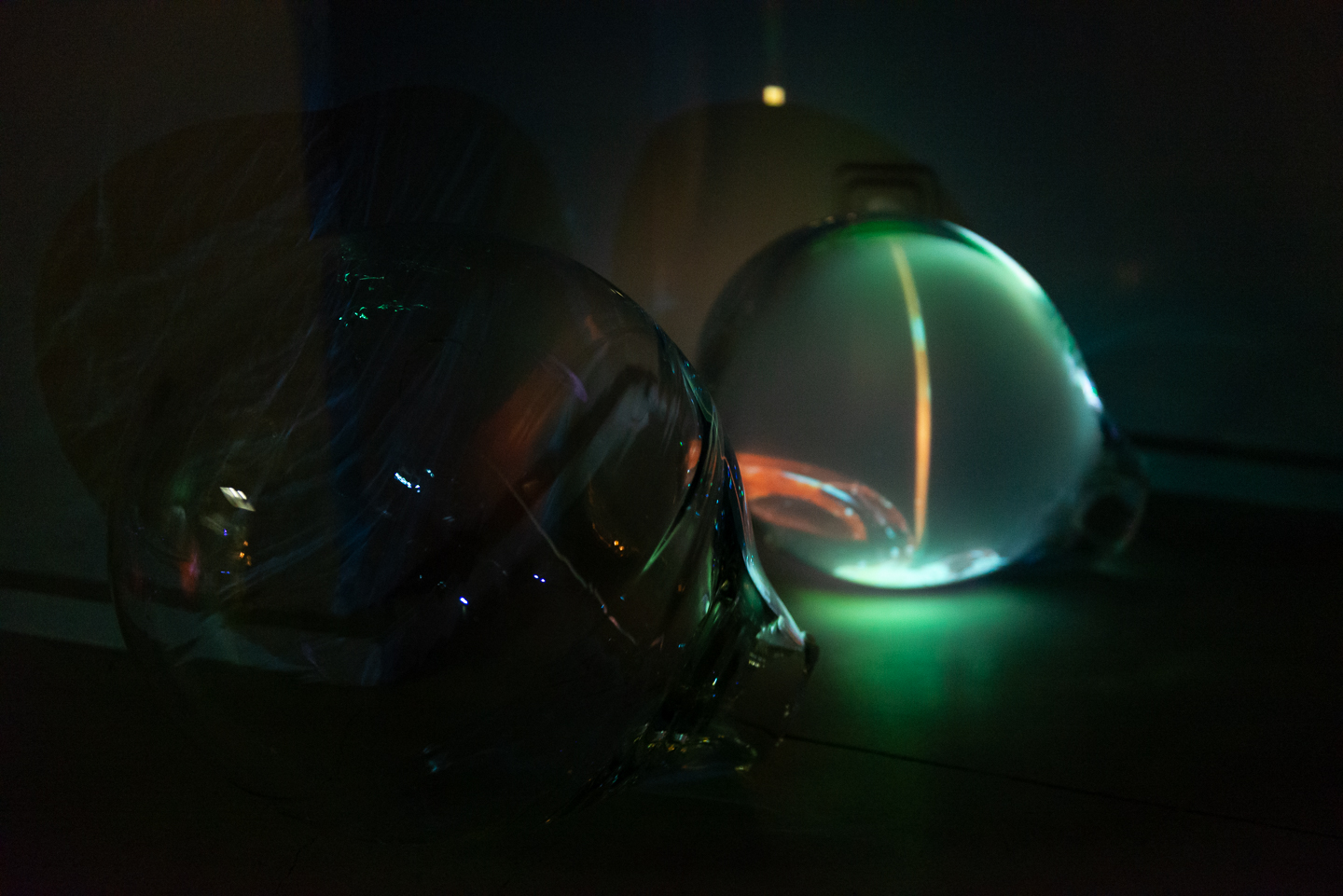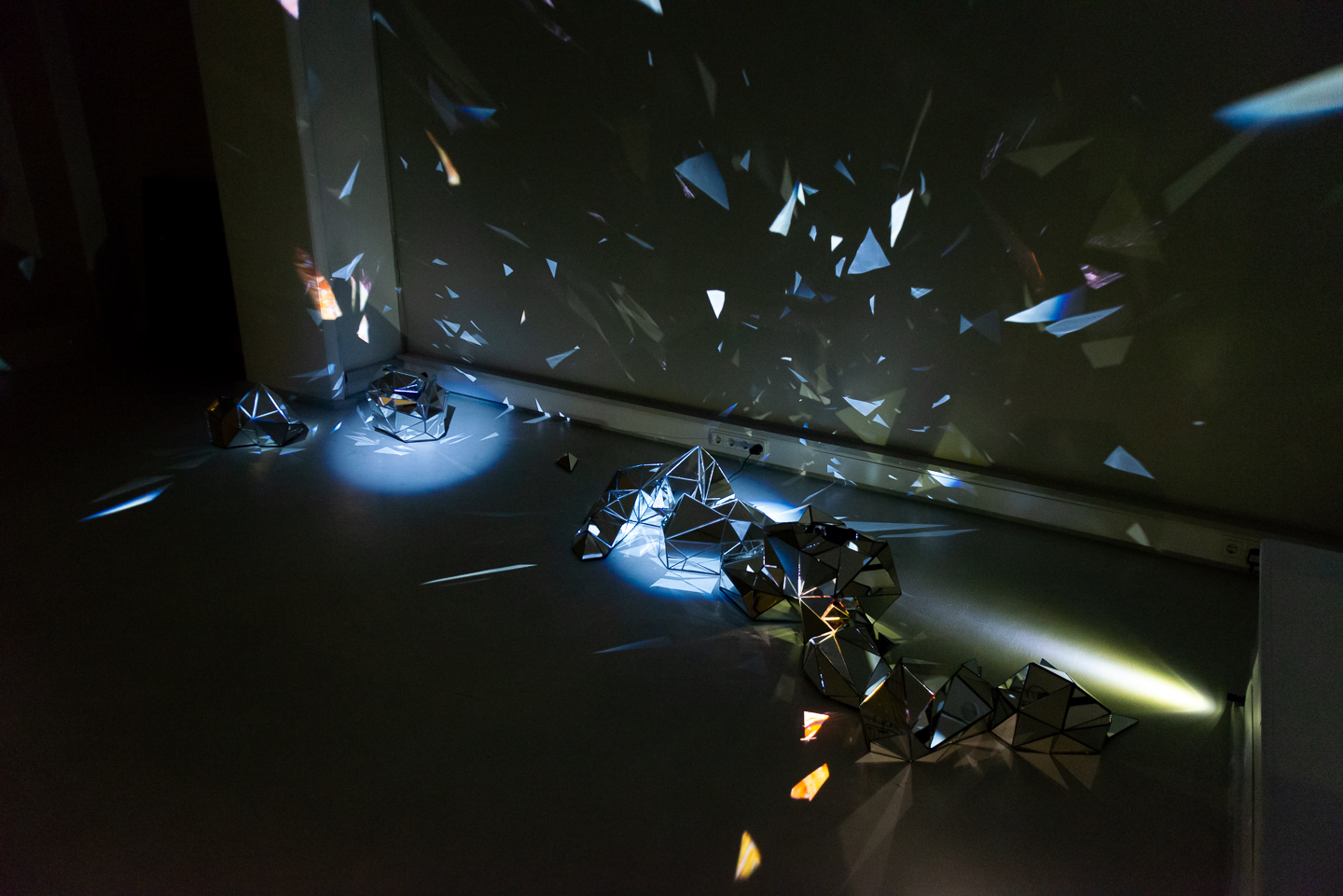
2026 BABEL

Annual exhibition of the Estonian Glass Artists’ Union
BABEL
Rakvere Castle, June 26- September 10, 2026
Opening June 26, 4pm

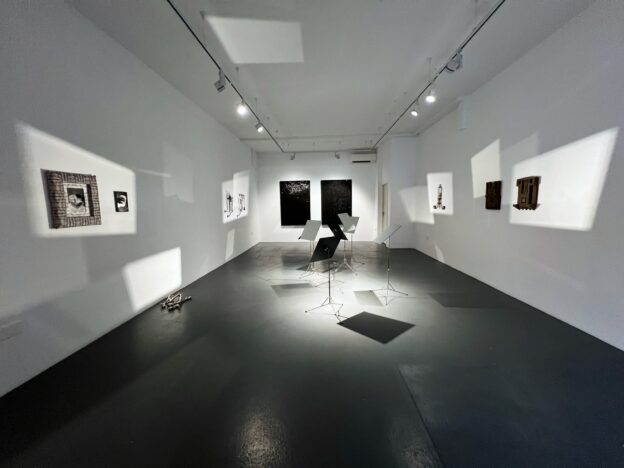
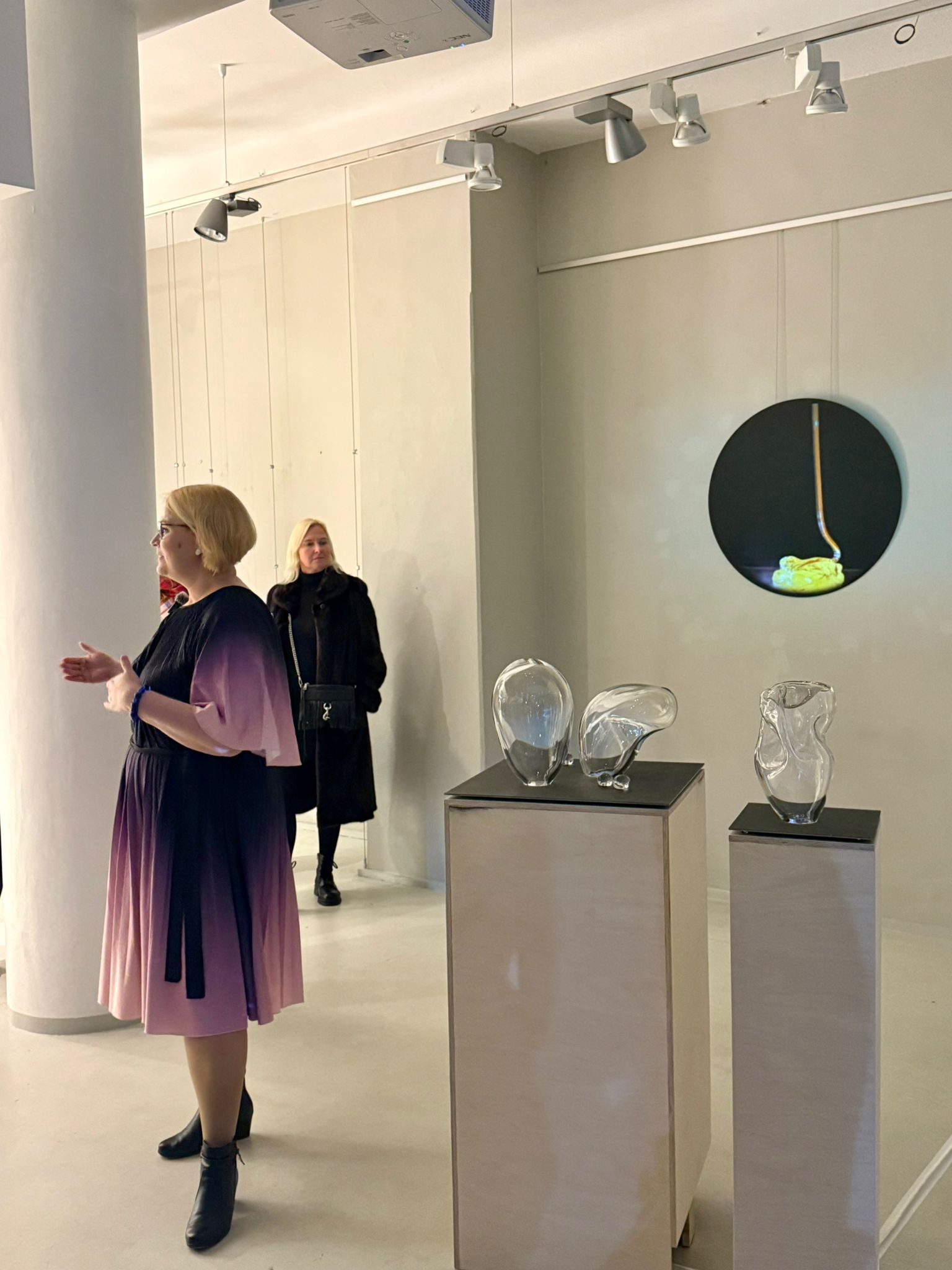
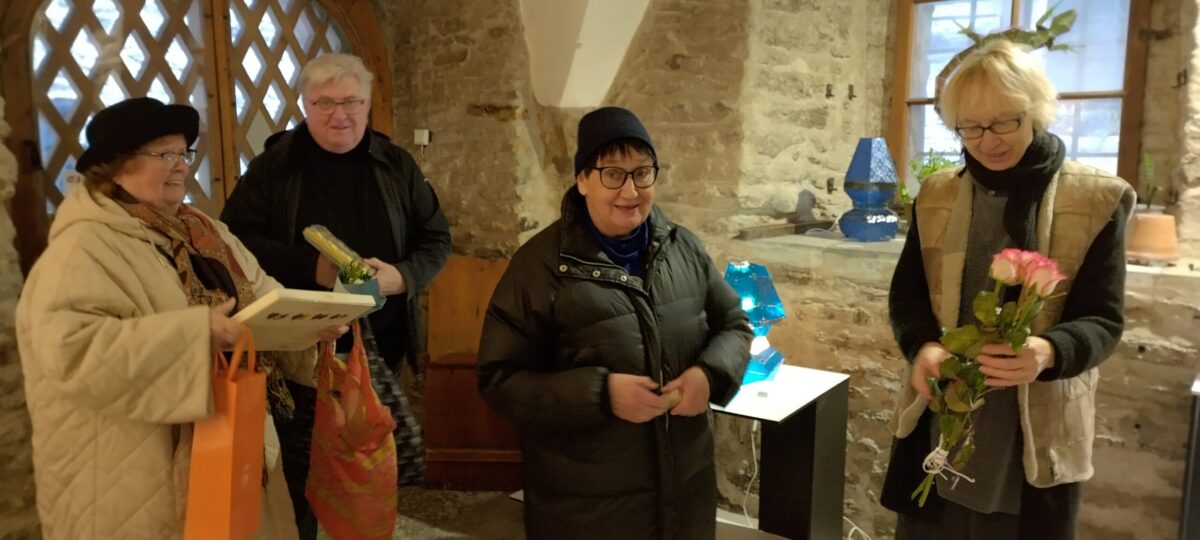
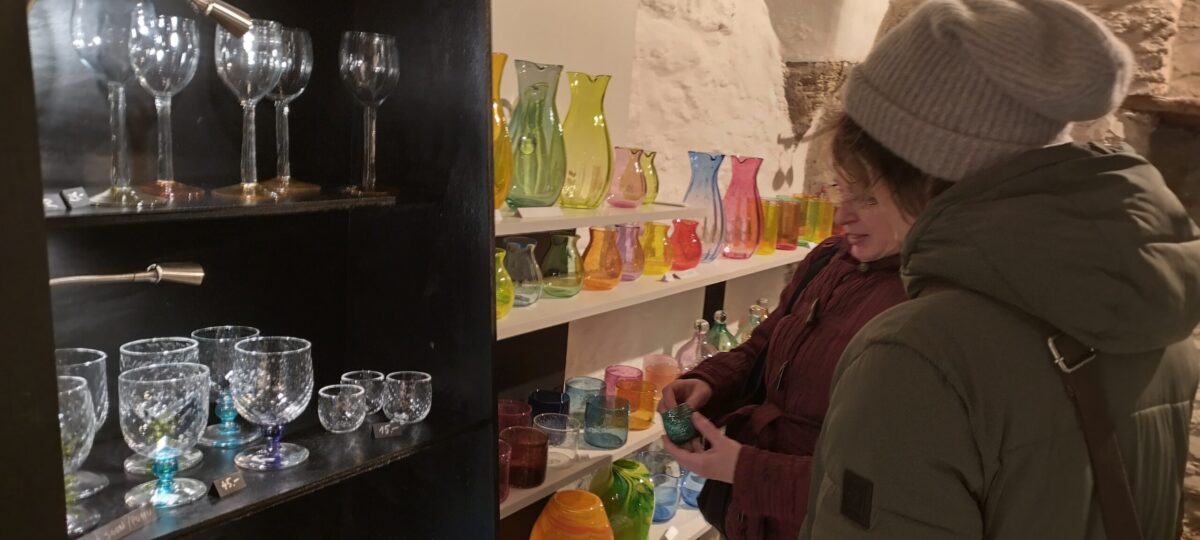
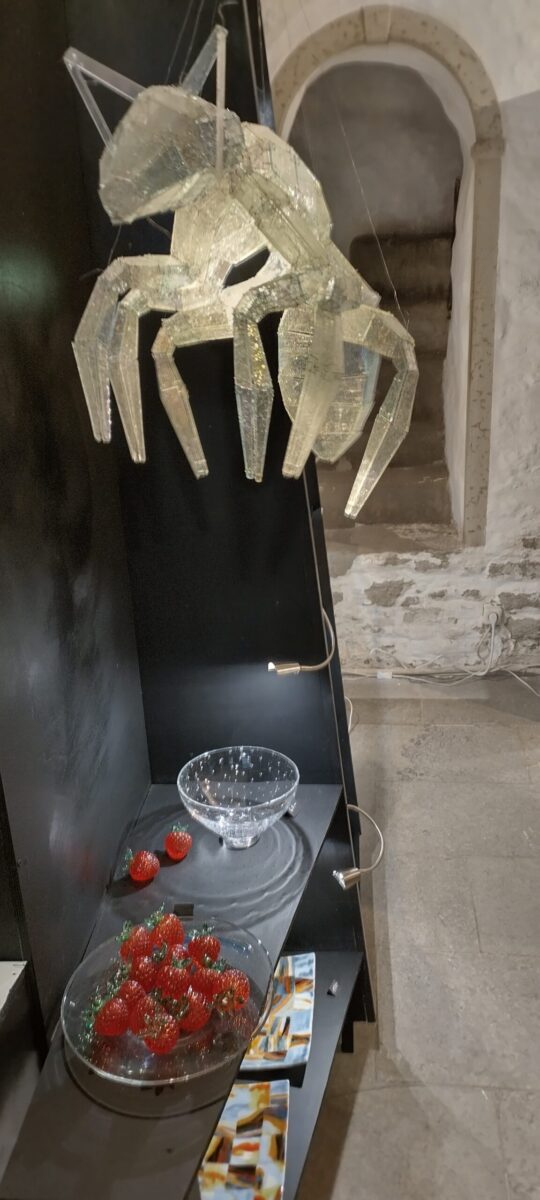
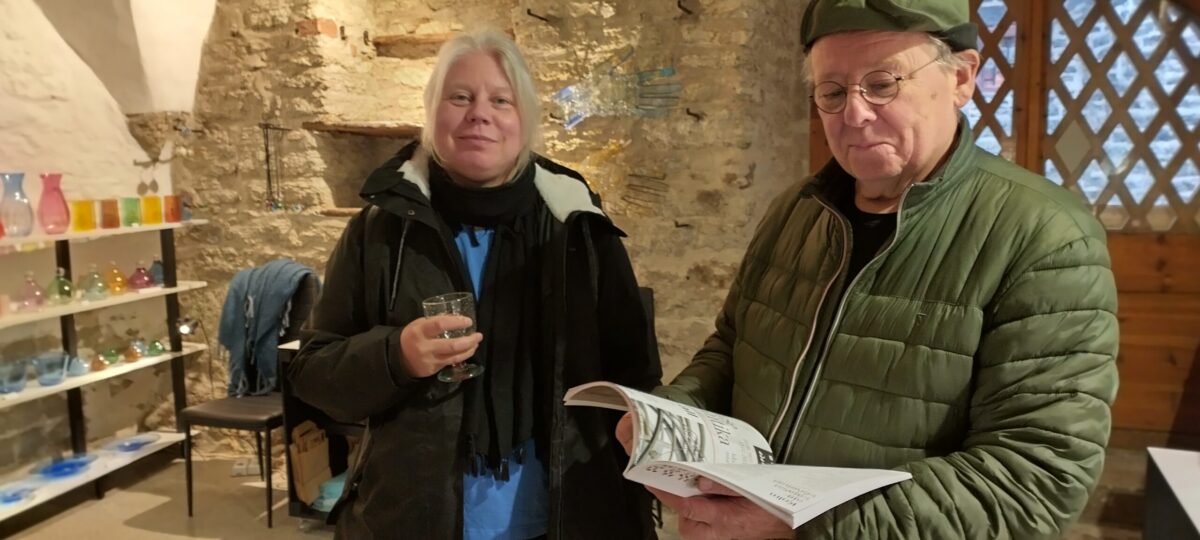
The Estonian Glass artists’ Union welcomes you at our traditional yearly exhibition. This summer, we bring our works to the medieval castle of Rakvere, under the title BABEL.

The Confusion of Babel is a metaphor for a situation where there is a break in communication and the meaning goes missing. We might be deaf to overused expressions, or conversely, statements that appear too radical fail to pass the recipient’s mental walls; something might get lost in translation, or acquire a meaning not originally intended. All this could result in conflict, but chaos can also bring about creation.

Can an artist take on the role of interpreter? Someone educated in the liberal arts knows their way around a Babel of languages, can express their thoughts intelligibly, yet uniquely; straddle the balance of familiarity and curiosity; tell real dangers from imaginary ones. As artists, however, we rely not on words, but visual images and metaphors – ideally, ones speaking for themselves without needing an explanation. Through conflict or cooperation with matter, miracles sometimes happen – we don’t take this for granted, but leave the door open for the possibility.

The curators hope to bring you a display of powerful, utopian energy. We endeavor to accommodate exclamations in any language imaginable.

Rakvere – a Kreis-town (or crazy town?) – has become known as a place for experimentation and bold new ideas. The city lends its rebellious spirit to our exhibition: the plurality of styles and handwritings is our strength, a source of chaos and creativity.

Participants: Sofi Aršas, Piret Ellamaa, Riho Hütt, Elle Kannike, Erki Kannus, Merle Kannus, Malle Karik-Hallimäe, Kati Kerstna, Kai Kiudsoo-Värv, Eve Koha, Sigrid Luitsalu, Kairi Orgusaar, Heli Press, Rait Prääts, Kateriin Rikken, Mare Saare, Tiina Sarapu, Kalli Sein, Caspar Sild, Eili Soon, stuudio Kollektiir (Mari UIbo, Rait Lõhmus), Agnes Torm, Piret Uibotalu, Kaie Vakepea, Kersti Vaks.

Curators: Riho Hütt, Merle Kannus
Exhibition Design: Caspar Sild, Riho Hütt
Lighting Design: Kati Kerstna
Sound Design: Henri Hütt

Thank you: Cultural Endowment of Estonia, Rakvere castle (SA Virumaa Museums), Rakvere Cultural Centre.

Photos: Mati Hiis.

2026 Maarja Mäemets, Evelina Lindström THROUGH

On 18 June at 6 PM, Maarja Mäemets and Evelina Lindström opened their joint exhibition Through at the Hobusepea Gallery.

The exhibition brings together two different approaches to memory that have taken form as delicate ceramic and glass art pieces. Evelina Lindström addresses memory through Henri Bergson’s concept of duration (durée), while Maarja Mäemets views it as a spatial structure.

According to Bergson, time in lived experience does not flow linearly or evenly, instead it moves in different rhythms and intensities. Memory is not an archive of the past, but a continuously active and ongoing variable. In Lindström’s works, this idea is expressed in recurring pearl shapes, implying how an irritation or a foreign body, such as a grain of sand, can over time develop into something enduring and coherent.

In the works of Mäemets, memory appears as a space where remembrances have been stored, relocated or partially lost. The viewer encounters stairs that lead nowhere, empty containers and objects raised above eye level and hand’s reach, turning memory into something fragmented and only partially accessible. In her installations, Mäemets draws on the ancient Greek method of loci or the memory palace technique, which means that memories are placed at different locations within an imaginary architecture. While this technique is traditionally used to organise knowledge and memorise complex information, Mäemets uses it to map emotions, memories and personal experiences.

Together, the works of Lindström and Mäemets form two complementary approaches to memory: seeing it on the one hand, as a lasting and continuous experience, and on the other, as a spatial structure in which some memories will always remain inaccessible.

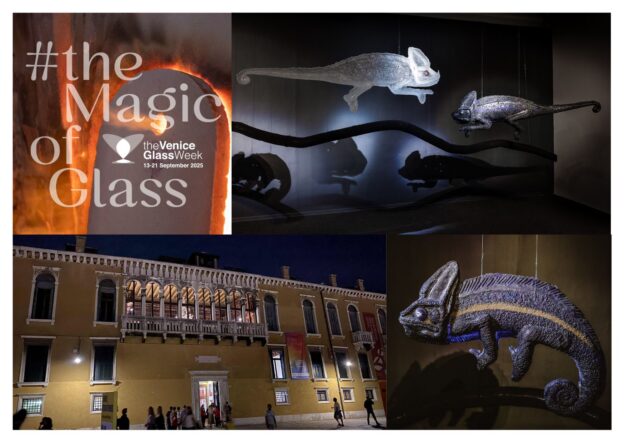
Maarja Mäemets (b. 1991) is an Estonian artist based in Stockholm whose work explores manual practices through narrative objects, working primarily with glass, as well as with installation and text. Through material-based storytelling, her practice investigates gaps and uncertainties in personal memory, searching for traces of hope and courage within what remains. She holds BA and MA degrees in glass art from the Estonian Academy of Arts and is currently pursuing an MFA in CRAFT! at Konstfack University of Arts, Crafts and Design in Stockholm. Her work has been presented internationally, including at major European design and craft platforms, such as the Milan Design Week and the Venice Glass Week. Since 2025, she has been the main organiser of the next Tallinn Applied Art Triennial.

Evelina Lindström (b. 1990) is a Swedish, Stockholm-based artist working primarily with sculpture and image-making in clay/ceramics. She holds an MFA from the Royal Institute of Art in Stockholm and a BFA from the art academies of Umeå and Vienna.
Through her artistic practice, Lindström explores impermanence and the fragility of life. Her works give form to the emotional landscapes embedded within experiences of transience, addressing themes of melancholy, grief and consolation. Working with materials that carry both vulnerability and resilience, she creates sculptures and images that evoke the fragile balance between loss, memory and care.

Curator:
Lilian Hiob-Küttis
The exhibition is supported by the Cultural Endowment of Estonia.

2026 Maret Sarapu, Julia Valtanen FLUID.FRAGILE

Maret Sarapu, Julia Valtanen
FLUID.FRAGILE
Punctum Gallery
April 9 – May 24, 2026

The exhibition brings together the artistic practices of Julia Valtanen and Maret Sarapu, based on an understanding of the world not as a collection of separate objects, but as a system of interconnections constantly in the process of change. Here, form is not fixed but emerges through process, through becoming, through the relationships between elements.

In Julia Valtanen’s works, forms are fluid, they flow into one another, creating hybrid, organic structures. The composition has no center, and its elements are not subordinated to hierarchy; the viewer’s attention is distributed across the surface, as if in an ecosystem where everything is intertwined and interconnected. In her new works, the pictorial layer remains dynamic: she allows the paint to flow, giving the material greater agency. There is also more air, more pauses, more breathing space in her recent pieces.

Julia’s collages become an important transition within the exhibition. Unlike painting, where form emerges through flow, here it is cut out and defined by a clear edge. The fragment appears, along with the layering of different planes, while the empty spaces become traces of absence, equal parts of the composition. Collage introduces a principle of assembly that is then continued in the practice of Maret Sarapu.

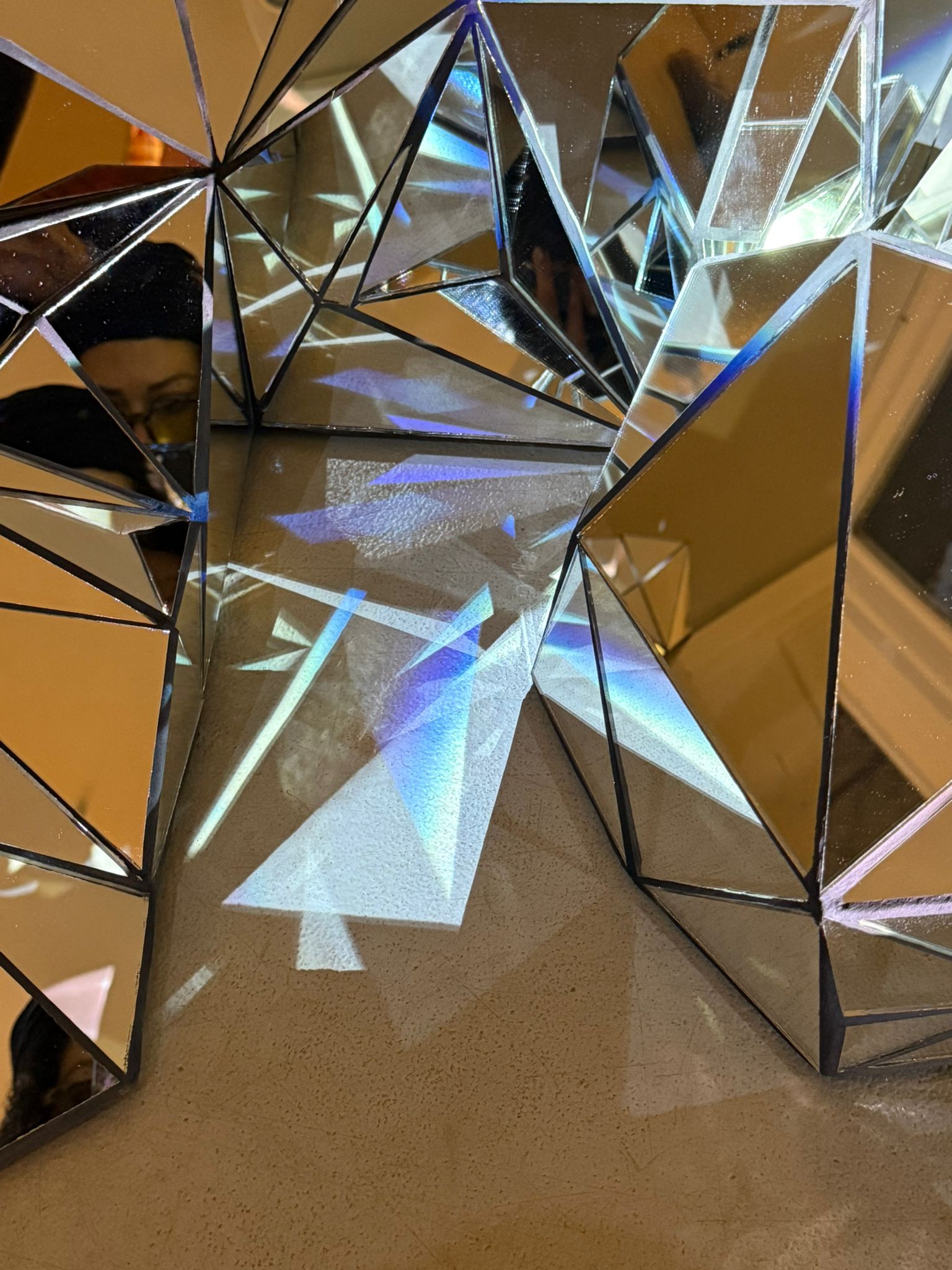
In Maret’s works, form is also unstable, but for a different reason: it depends on perception. Glass, reflections, and light create situations in which the image changes as the viewer moves. The angle of view, as well as the intensity and quality of light, determine what becomes visible. The layers here are not painterly but optical – they are shadows and refractions that generate multiple versions of the same image.

A special place is given to the amphora – an archetypal form known as a symbol of wholeness and stability. In Maret’s work, it is covered with a fragile mosaic, turning into a surface assembled from fragments. Here, the unified form is sustained by a multitude of individual elements, each retaining its autonomy. The whole emerges not in spite of the fragment, but because of it.
In the artistic practices of both artists, fragmentation does not mean destruction. On the contrary, the fragment becomes a way of assembling a world that is layered and ever-changing.

“Fluid, Fragile” is a space where fluidity and fragility are not opposed but complement one another. Matter, form, and perception exist in a state of continuous transformation, where interconnections prove more important than the objects themselves.

The exhibition is supported by the Cultural Endowment of Estonia.

2026 new stained glass piece by Kai Kiudsoo-Värv at Paide Holy Cross Church

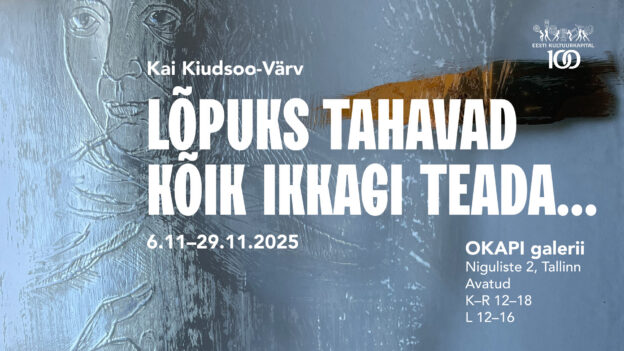
Kai Kiudsoo-Värv has completed a new stained glass piece this Easter for the Holy Cross Church of Paide. The piece fills a blank spot left in the stained glass window by Ernst Friedrich Tode from 1913.

The author would like to thank Eve Koha for her research work, and Ain Alle (Aindhooven OÜ) for technical assistance.

2026 Glass artists at the EAA Spring Show

A record number of glass artists were selected for this year’s Estonian Artistsä Association Spring Show: Rait Prääts, Tiina Sarapu, Maret Sarapu, Malle Karik-Hallimäe, Kati Kerstna, Maarja Mäemets, Mare Saare, Kairi Orgusaar, Kai Kiudsoo-Värv and Sofi Aršas. Congratulations!

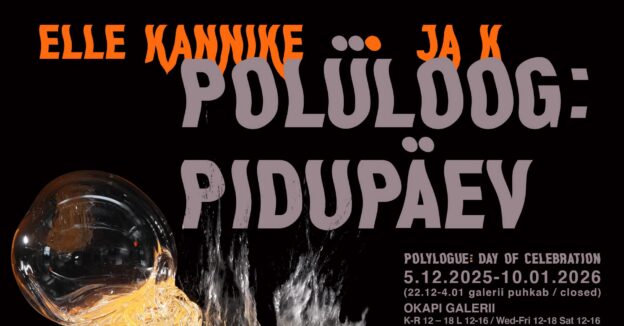
2026 Erki Kannus FIREWATERCOLOR

On Friday, 13 February at 5:00 PM, the artist Erki Kannus will open his exhibition “firewatercolor”at the Vabaduse Gallery. The exhibition will remain open until 11 March 2026.

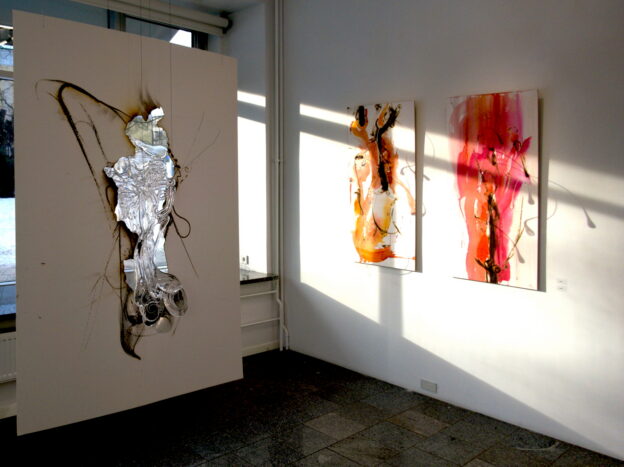
Erki Kannus has released three forces on paper: fire, water and paint. He then tries to tame them according to his abilities, perhaps even to reach some sort of harmony. However chaotic the process may seem, or however abstract the result, there is always a Woman at its beginning and end. In the maelstrom of this nameless Woman’s moods, in the interplay of her fervency and fluidity, the author gets burnt and soaked in equal measures.
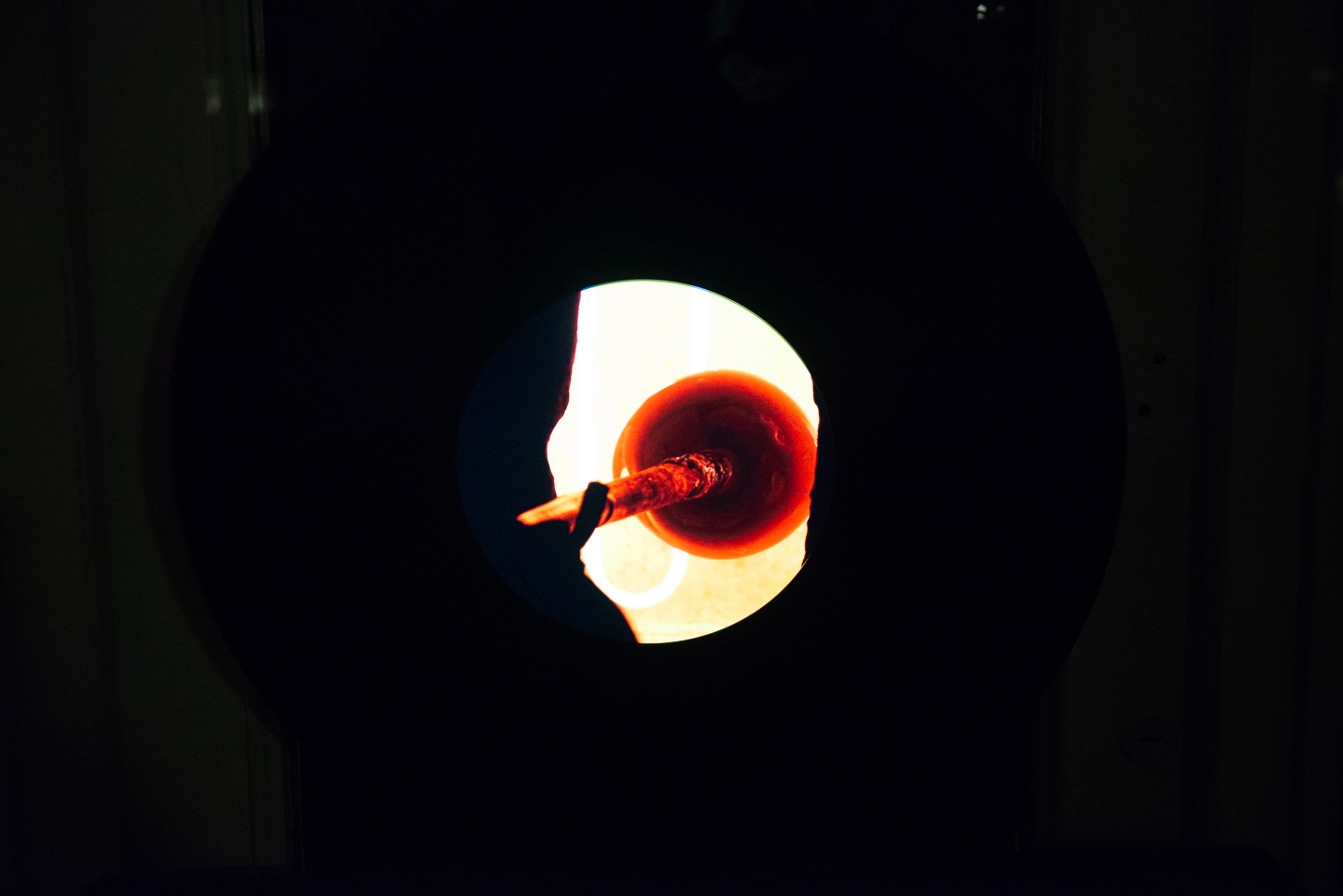
The fire is conveyed on paper via the medium of molten glass, which embodies the two extremes simultaneously. Water works in classical watercolour style, allowed to flow and roam more or less as it pleases. The relation with colour is more playful and coquettish, smoothing out the sharpest edges.
Seeking contact with the Woman within himself and in others, the author tests the limits of his vulnerability and safety.

ERKI KANNUS (b. 1958, Tallinn) graduated from the State Art Institute of the Estonian SSR (ERKI), Department of Glass Art in 1981. He has participated in exhibitions since 1976, having exhibited his art in Estonia, Latvia, Lithuania, Poland, Bulgaria, France, Ukraine and America. He mainly works with watercolours, oil paintings and glass objects. Over the years, Kannus has worked on a project called “Tilinatoorium”, creating interactive objects using sound art and multimedia. In recent years, he has focused on glass art and painting, and he has had solo exhibitions in Tallinn, Rapla, Kärdla and Pärnu. Kannus is a member of the Estonian Artists’ Association, Estonian Watercolour Society and Estonian Glass Artists’ Union.

Thanks to: Merle Kannus, PUHU Stuudio, Olustvere Klaasikoda, Eili Soon, Kaie Vakepea, Helen Maasik and Aivar Jalandi.
The exhibition is supported by the Cultural Endowment of Estonia.
The gallery is supported by the Estonian Ministry of Culture, the Cultural Endowment of Estonia and Liviko Ltd.
The Vabaduse Gallery is managed by the Estonian Artists’ Association.
_______
VABADUSE GALLERY
Vabaduse väljak 6, Tallinn
Wed, Fri–Sun 12:00–18:00, Thu 12:00–19:00
vabaduse [at] eaa [dot] ee, +372 5805 0009
galerii.eaa.ee/vabaduse/
2026 Kairi Orgusaar TUNING. THE FORMULA OF HARMONY

Kairi Orgusaar
TUNING. THE FORMULA OF HARMONY
HOP Gallery
19.12.2025 -11.01.2026

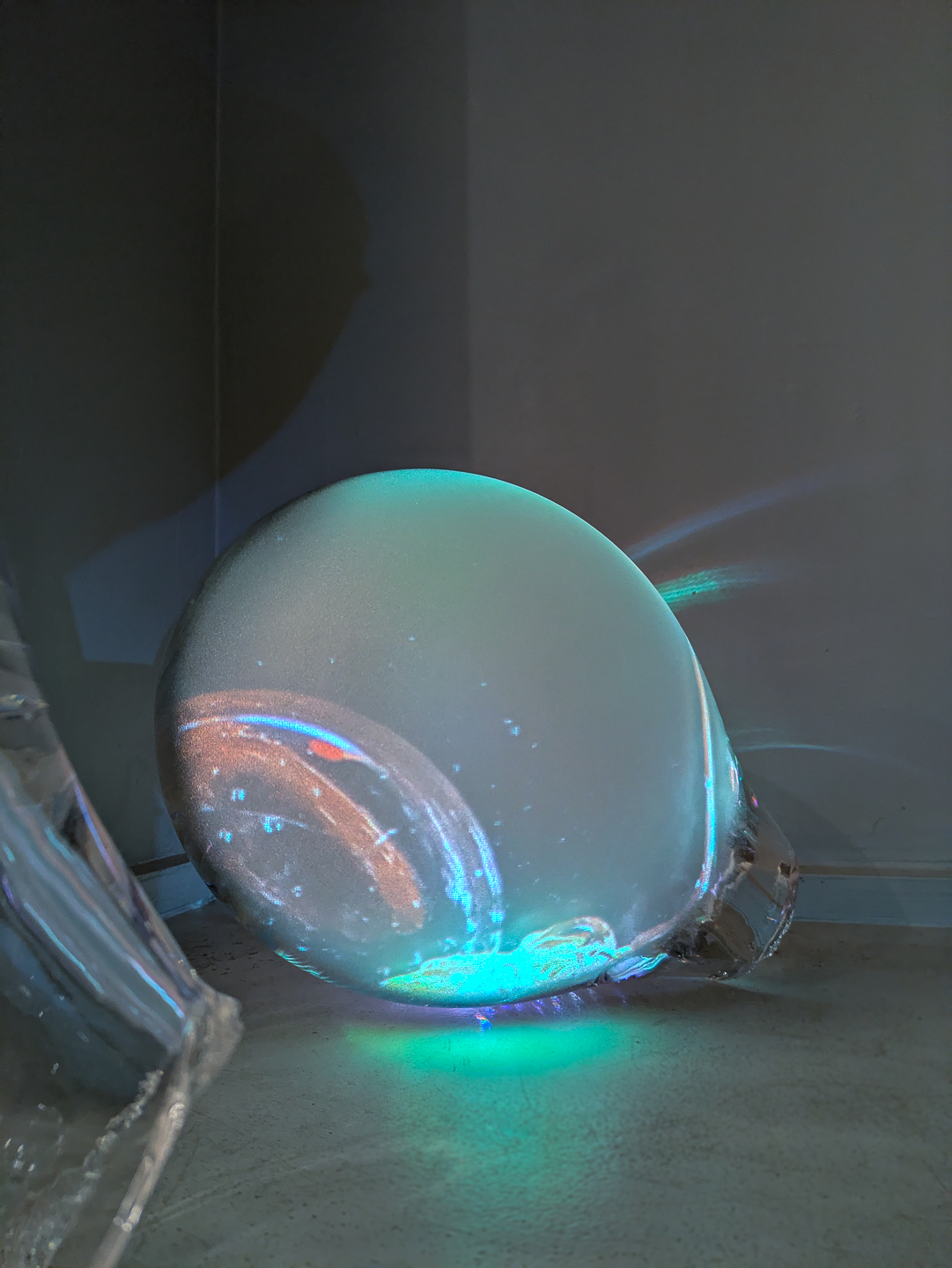
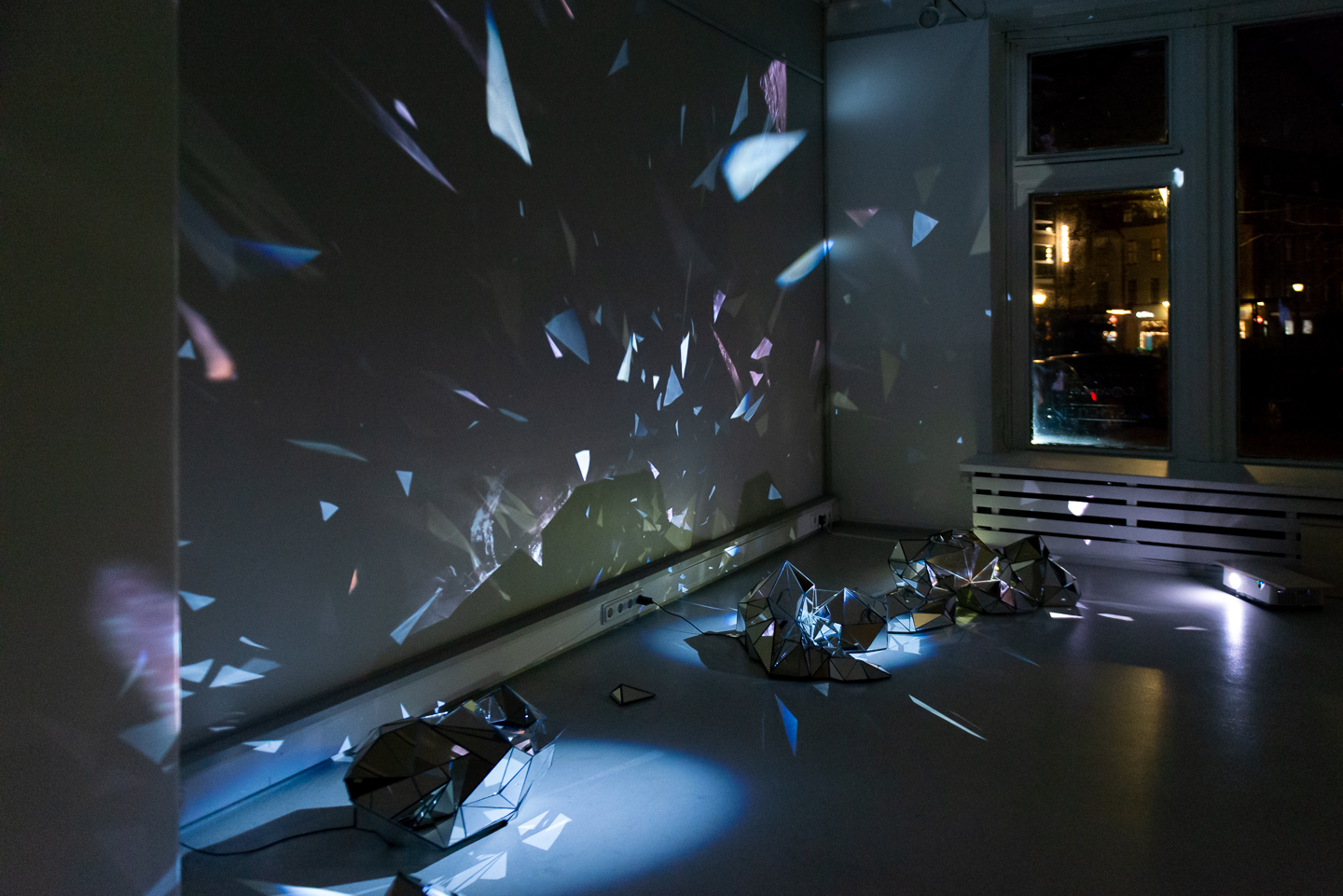
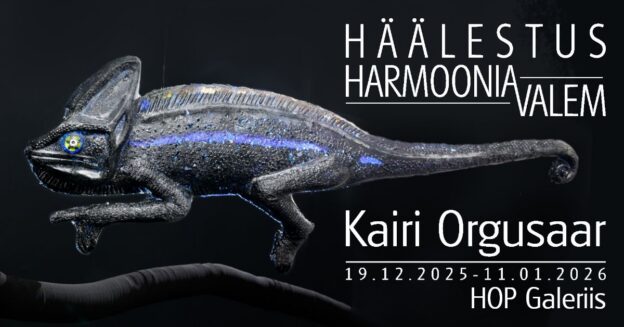
In the exhibition the artist is trying to find the recipe for harmony. For this purpose, she developed a world made up of fantastic creatures, swinging in beams of light, casting shadows and reflections.

Orgusaar is working primarily with glass in this exhibion. Her powerful sculptural glass forms and installations take on a poetic, delicate appearance with the addition of light. She is mostly intrigued by topics both intimate and timeless, but won’t turn her back on simple play and fantasy. She keeps returning to the theme of environment, and its interaction with the subject; harmony and dissonance, connections and influences.

“These entities in the exhibition, have but one language to express their emotions – that of colours. Joy, pain or arousal get projected as hues and shades of their skin. Since glass is the medium giving them form, they’re partially transparent, seemingly immaterial, submerged in water – as if they’ve been transported from some lost continent, like Lemuria,” the artist explains.

“Art would be useless if the world were perfect, as man wouldn’t look for harmony but would simply live in it.”
/ Andrei Tarkovsky /

Kairi Orgusaar (b. 1969) is a graduate of the Estonian Academy of Arts, specialising in painting and has a master’s degree in glass art. She’s been participating in exhibitions home and abroad since 1996. She’s a triple laureate of the Estonian Cultural Endowment’s regional award. Her works can be found in the Ernsting Stiftung Alter of Herdingi collection, Germany, in the Estonian Museum of Applied Art and Design, and in private collections. In 2004, she founded her studio OÜ Kunivorm, and is the founder and board member of the Rapla County Centre for Contemporary Art since 2010.

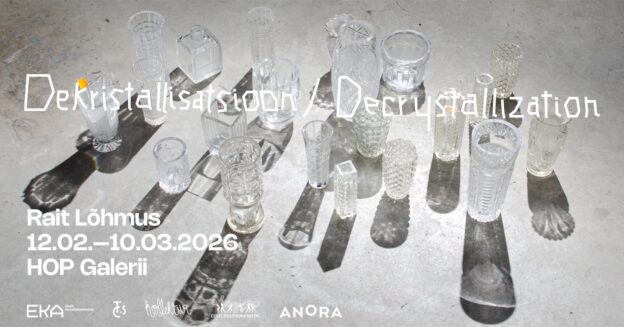
2026 Rait Lõhmus DECRYSTALLIZATION

Rait Lõhmus
DECRYSTALLIZATION
HOP Gallery
12-26.02.2026

Rait Lõhmus’ solo exhibition Decrystallization at Hop gallery is a continuation of the author’s material approach that he has developed during his MA studies. As part of his master’s thesis, Lõhmus researched the use of ready-made glass molds in glassblowing studios and proposed an alternative approach to studio glass – a treatment of materials that has remained unchanged for nearly 70 years. Decades of stagnation motivated Lõhmus as a designer to explore and describe the reasons for and consequences of the changing value of the consumer products made of glass.
Lõhmus has been focused on reblowing packaging glass, everyday consumer items, and glass objects that are part of the local industrial heritage. Through the author’s technique developed during his studies, the artist proposes a possible continuation to glass objects that have lost their value, thus opening up the life cycle of the objects to a wider audience. In light of constant technological development and endless consumption, countless glass objects have been created in today’s time and space, with the value diminishing over time. Each object embodies a layer of cultural, social, and economic meaning, which, when placed in a new context, reveals the hidden values of glass objects and opportunities to reinterpret their current role.
Decrystallization is a hierarchical continuation of research on the value of glass materials. In the course of research that grew out of Rait Lõhmus’s master’s thesis project “Reblow Toolset: Infinite,” the author has thoroughly studied the properties of glass by experimenting with different finished forms. The technological factors that influence the physical properties of different glass materials have been identified by now. While the processing of packaging glass is fast and hectic and the finished form is anonymous in nature, crystal objects embody a material in which the work and presence of previous authors and masters can be perceived in the form of cuts and engravings. Lõhmus has collaborated namely with these former authors in order to transfer these details into a new form. Crystal, semi-crystal, and crystal-like vases, once considered luxury items and kept in display cabinets for only the most important occasions, have now been left in endless anticipation. Through the changes in form, status, and function, the hidden layers and timelessness of the material are revealed to the viewer.

Rait Lõhmus (b. 1993) is a designer and artist/craftsman who primarily uses glass as his material. In his practice, the artist focuses on reblowing various ready-made glass forms. This approach to materials allows him to create a bridge and exchange ideas with earlier productions and creators. Lõhmus has acquired a bachelor’s degree in the department of glass art and a master’s degree in Craft Studies at the Estonian Academy of Arts. In addition to running the Kollektiir Studio, Lõhmus works as the head of the glass workshop and a lecturer at the Estonian Academy of Arts. In 2025, the artist received the Young Applied Artist Award of the Estonian Academy of Arts.
Exhibition is supported by the Cultural Endowment of Estonia, Estonian Academy of Arts, ANORA

Exhibitions in HOP gallery are supported by the Cultural Endowment of Estonia, Estonian Ministry of Culture and Liviko Ltd.

2025 Tiina Sarapu at KOGO Gallery

Flash show
The Longest Night of the Year
Curator: Stella Mõttus
29.11.2025 – 7.2.2026

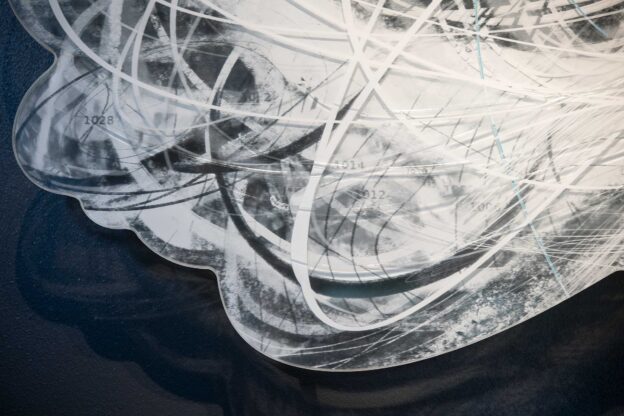
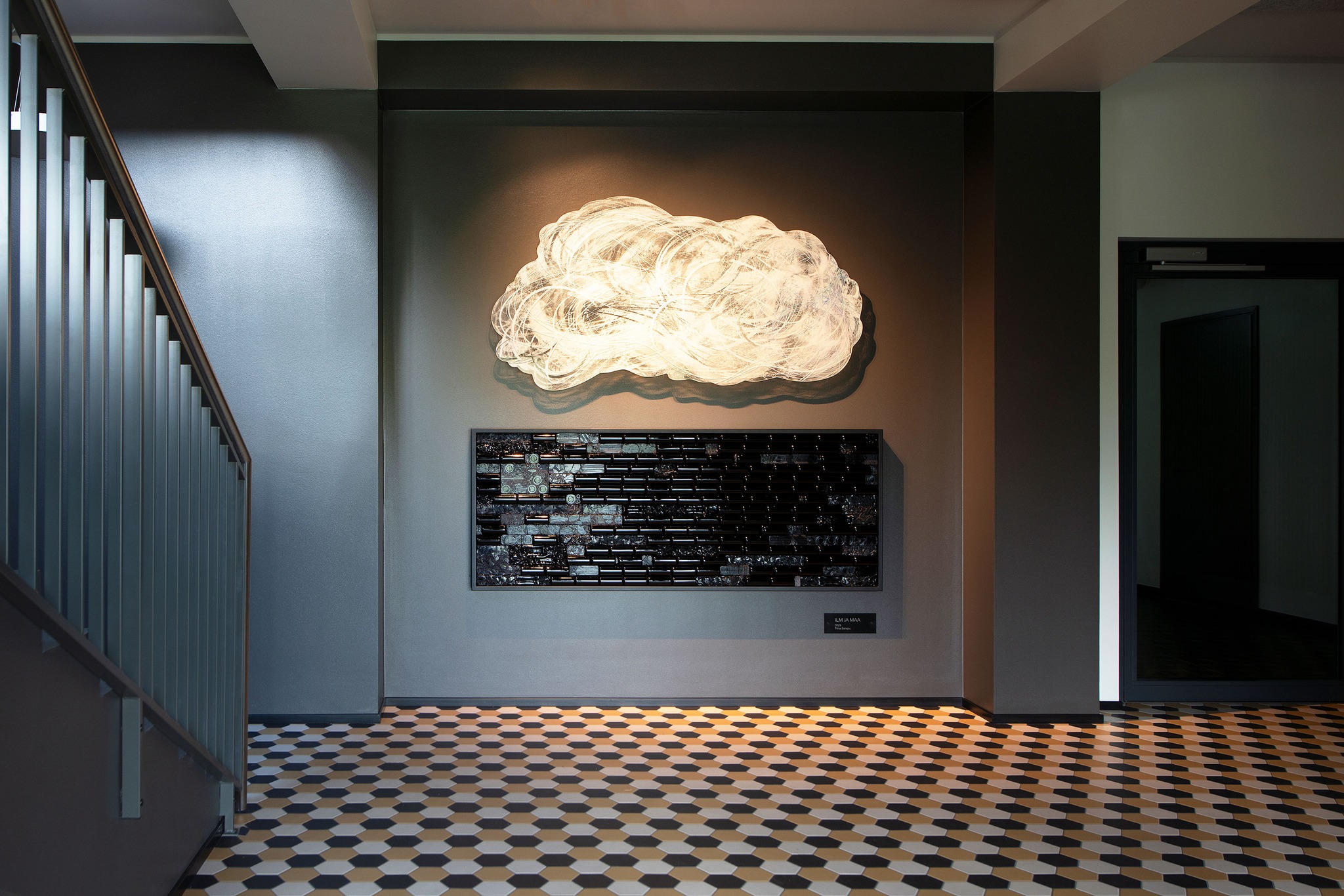
From 29 November, our winter flash show The Longest Night of the Year is open at Kogo Gallery, presenting works by seven artists from Estonia, Latvia and the United Kingdom. The participating artists are Agate Tūna, Anna Mari Liivrand, Bob Bicknell-Knight, Ellen Vene, Madlen Hirtentreu, Tanja Muravskaja and Tiina Sarapu. The exhibition is curated by Stella Mõttus.
Check out the artworks: https://www.kogogallery.ee/…/flash-show-the-longest…/
When we think of Christmas, the first things that may come to mind are bright and warm living rooms, carefully decorated Christmas trees and tree skirts, and LED lights illuminating your own windows as well as those of every neighbour. Yet in nature, pitch-black darkness prevails. The days draw in, the light disappears incredibly quickly, and from morning to evening, there is a single stretch of dimness. It feels as though it never gets light at all. It is hard to imagine now that soon the sun will set only late in the evening.
Before the solstice, it can feel as though we are in another timespace – a space that is dark, but not empty. As we grow accustomed to the darkness, it becomes clear that the shadows do not conceal but reveal new layers: sounds become clearer, scents sharper and time seems to slow down. Our senses shift into a different tuning that allows us to perceive nuances hidden by daylight or noise. Darkness also makes room for imagination, creating the possibility of seeing what is not actually there.
Around the time of the solstice, it has been believed that the boundary between the realm of spirits and the earthly world becomes thinner, and that silence was necessary in order to stay awake, attentive and ready to listen to how different spirits and beings move around. Candles and bonfires helped, as they warded off the bad and kept one’s direction – light – in sight. Rooms were cleansed with smoke, the crackling of fire was used for divination and the sounds of the night were listened to. In this deep darkness, home becomes a kind of sanctuary – a place to retreat to during the season of spirits and sink into a winter’s rest.
This kind of timespace allows the warmth, presence and sense of anticipation we recognise as the feeling of Christmas to surface. Perhaps it does not lie in the nervous flicker of neon light in a neighbour’s window, but rather in the darkness, silence and smoke haze from the chimneys drifting across the land.
The works of the artists selected for this winter flash show radiate mystery and magic. Their pieces carry within them the transience of time, meditation, quietness, but also strength. Some works act as bright candles guiding one through the darkness; others allow what lies within the darkness to grow.

Photos: https://www.facebook.com/media/set/?vanity=tiina.sarapu&set=a.10236632166876859

Kogo Gallery
Kastani 42, Tartu
Wed–Fri 12–18, Sat 12–16
www.kogogallery.ee/en/

2025 Kateriin Rikken A BREATH

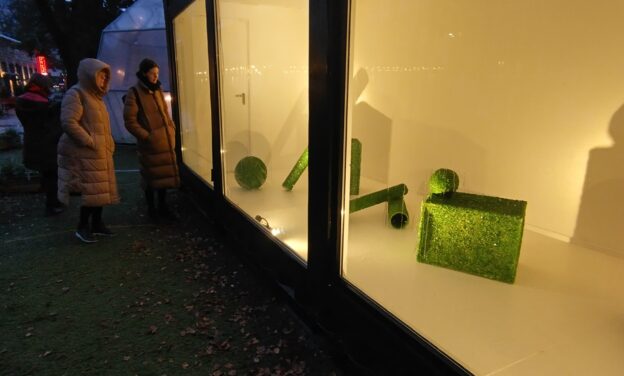
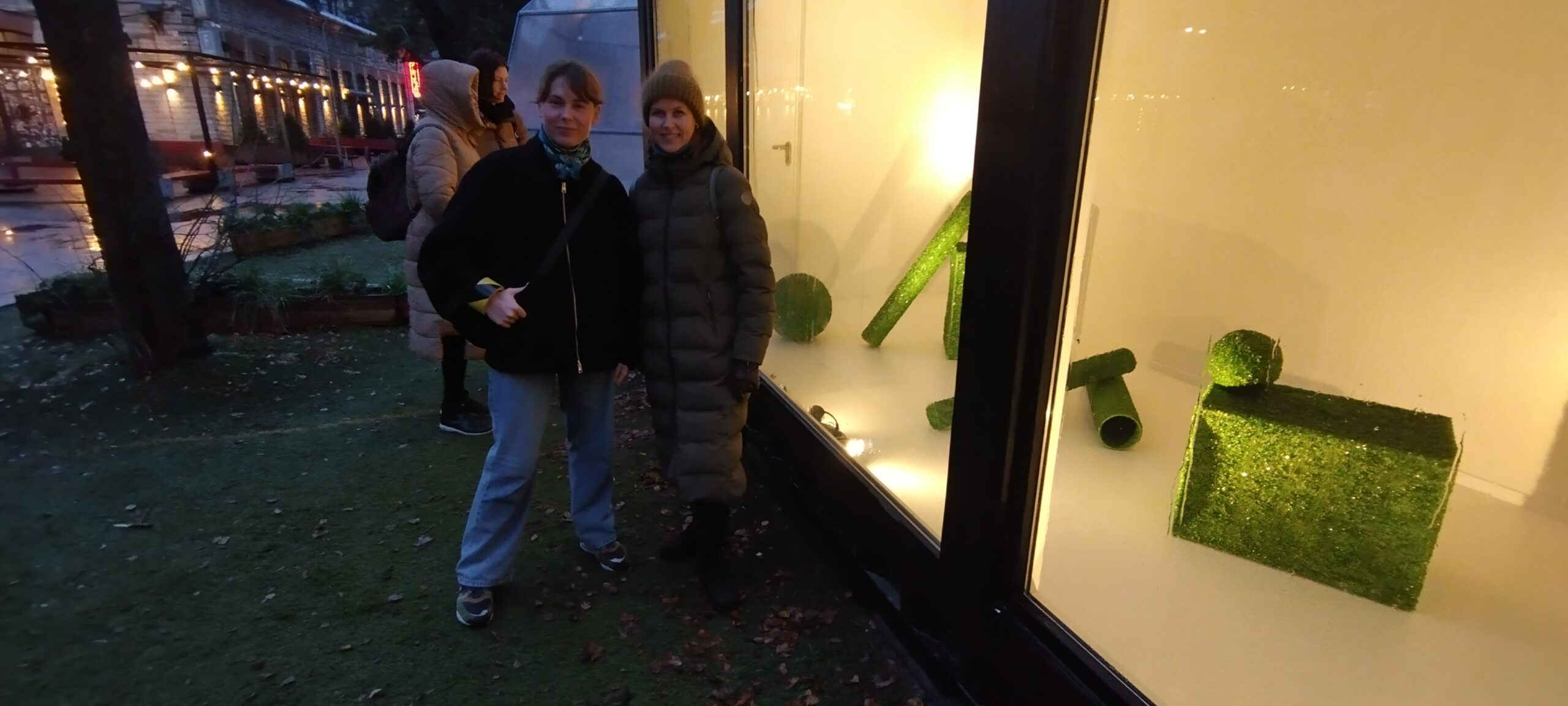
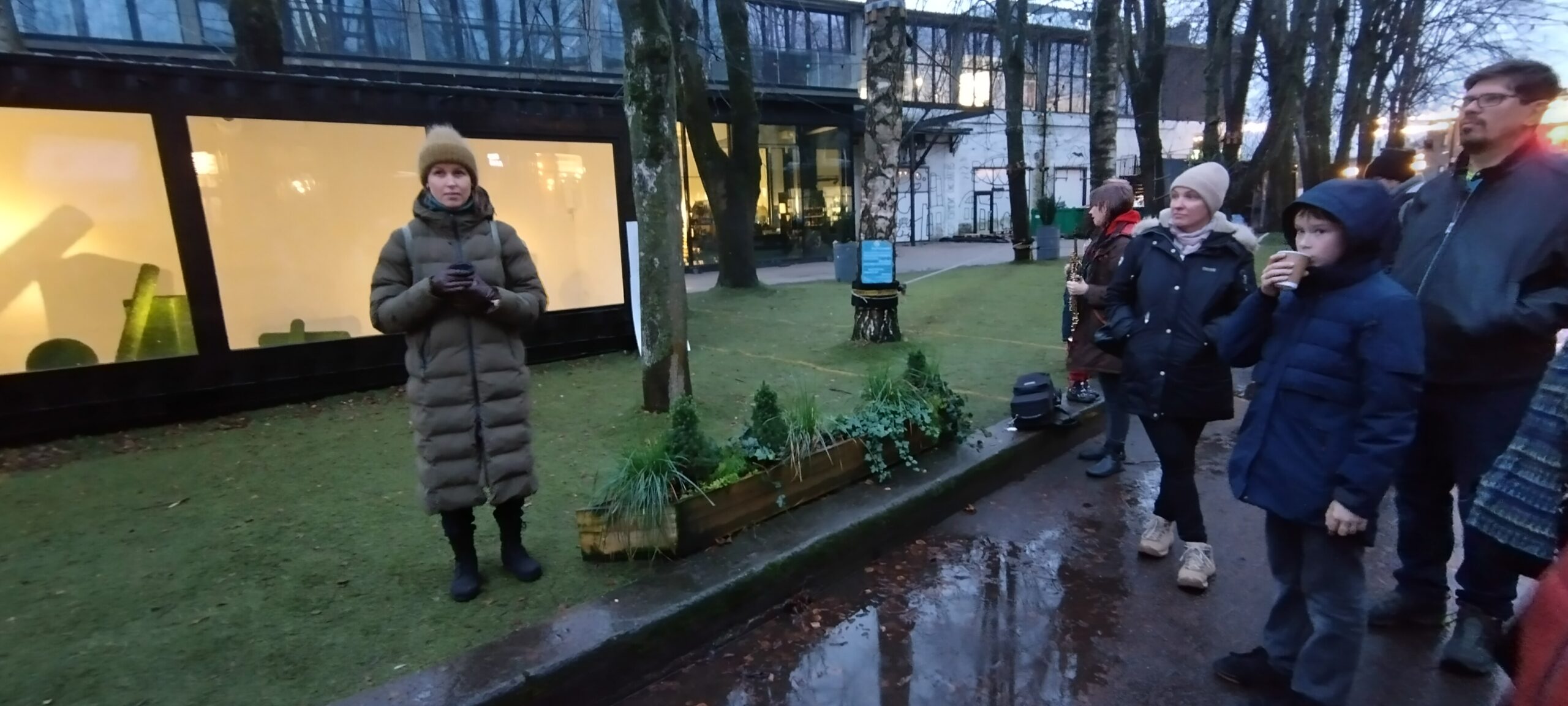
Kateriin Rikken’s solo exhibition “A Breath” opened in Konteiner Gallery in Telliskivi Creative City on the second Sunday of December.

The starting point for glass artist Kateriin Rikken’s solo exhibition “Sõõm” was the desire to take a break, look at what has been done and reflect on where to move forward. The artist’s soul had been filled with conflicting feelings and the joy of creation began to fade. “Shoshin” is a Japanese Zen Buddhist concept of approaching things with a beginner’s/beginner’s mindset. Shunryu Suzuki has said “If your head is empty, it is open to everything”. So the artist put aside his previous practice for a moment and pressed the “restart” button to experience the will to create for the sake of the will to create.

The exhibition features an installation using 63 green glass bottles collected from landfills, the Klubi Hall trash can, Frenchy Bistro and acquaintances. The bottles have been broken using a special method so that the fragments are not too sharp and are as similar in size and shape as possible. Found materials such as cardboard boxes and tubes, broken footballs and so on have been used as the main forms. The technique is gluing.

The artist has said: “The idea did not arise from the desire to give new life to materials. It was a desire to play without limits, to feel free, fun and creative, to be in the moment, to enjoy, to take a breath of the feeling of freedom. The train of thought started with glass, but has developed in its own way in a completely new way than in previous practice.”

Kateriin Rikken (1983) is an Estonian glass artist. She studied glass art at the Estonian Academy of Arts (BA 2005, MA 2023) and glass design at the Royal Danish Academy of Fine Arts Schools of Architecture, Design and Conservation in Denmark, glass art department in Denmark, Bornholm Island (BA 2010). She has worked in glass studios in Sweden, Denmark and Norway and since 2010 in her own glass studio. Kateriin has also been actively involved in exhibition curation and teaches glassblowing at the Glass Art Department of the Estonian Academy of Arts. She has participated in many local and international exhibitions, and her works can be found in private and museum collections in Estonia and Denmark.

Instagram: kateriinrikkenglass